


 |
> The Appraiser Coach > Appraisal Institute > OREP E&O ★★★★★ “They are knowledgeable, professional, and understand urgency.” – Joe Thweatt |
HB 355 and What Every Appraiser Should Learn from Kentucky’s Legislative Win
by Bryan S. Reynolds, MNAA
Kentucky’s recent passage of House Bill 355 is more than a state legislative victory—it is a case study in what can happen when appraisers come together to shape the future of their profession. Over the last five months, the Kentucky Association of Appraisers (KAA) worked closely with Representative Shawn McPherson, legislative counsel, and Bill drafters to help create what I believe is one of the most significant pieces of appraisal-related legislation ever enacted in the Commonwealth. This was a comprehensive Bill designed to modernize Kentucky’s appraisal laws, strengthen consumer protections, and provide meaningful legal safeguards for appraisers. Introduced in December 2025, HB 355 addresses several key issues affecting the profession, including:• Establishing a one-year statute of limitations for most complaints and civil actions involving appraisals. • Clarifying that appraisal-related services must be performed by licensed or certified professionals, subject to statutory exceptions. • Expressly authorizing credentialed appraisers to perform evaluations. • Modernizing terminology from “real estate appraisal” to “real property appraisal”. • Restructuring and strengthening board oversight. • Expanding board membership. • Updating renewal and continuing education requirements. • Improving administrative and enforcement procedures.
In short, HB 355 brings Kentucky’s appraisal framework into a more modern and practical structure while reinforcing public trust in the profession. I had the honor and privilege of testifying before the Kentucky House Banking and Insurance Committee in support of the Bill.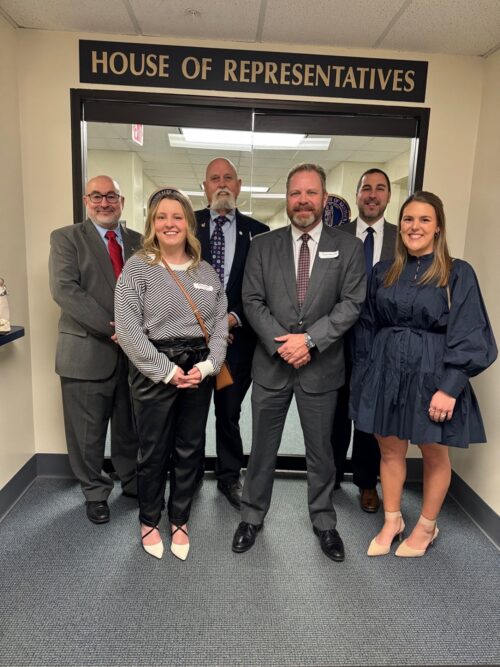 KAA outside The House of Representatives
The response from legislators was overwhelmingly positive, and both chambers of the General Assembly initially voted unanimously in favor of the legislation.
On March 31, 2026, the Bill was delivered to the Governor’s office.
As it reached the Governor’s desk, we understood there was a strong possibility a veto could occur.
On the tenth and final day permitted for executive action, that expectation became reality when the Governor issued his veto.
Fortunately, that was not the end of the story.
KAA outside The House of Representatives
The response from legislators was overwhelmingly positive, and both chambers of the General Assembly initially voted unanimously in favor of the legislation.
On March 31, 2026, the Bill was delivered to the Governor’s office.
As it reached the Governor’s desk, we understood there was a strong possibility a veto could occur.
On the tenth and final day permitted for executive action, that expectation became reality when the Governor issued his veto.
Fortunately, that was not the end of the story.
(story continues below)

(story continues)
On April 14, 2026, both the House and Senate voted to override the veto, officially turning HB 355 into law. That override was more than a procedural step. It demonstrated what can happen when appraisers organize, advocate, and actively participate in the legislative process. As Peter Christensen stated, “Appraisers in Kentucky now have the best legal protections of any appraisers in the U.S.” For those practicing outside Kentucky, there is an important takeaway here. I strongly encourage every appraiser to carefully review the statutes and administrative rules within their own state.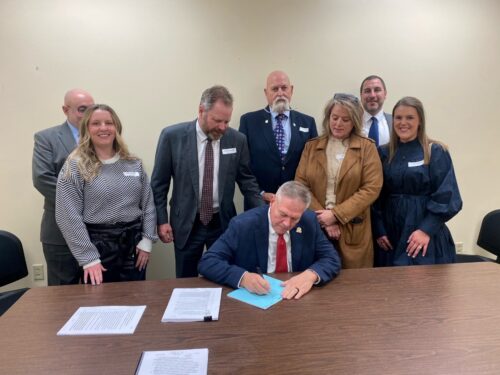 HB 355 Being Signed with KAA in Attendance.
Many appraisers assume they understand their liability exposure, but in many jurisdictions the statutes governing complaints and civil actions provide little to no meaningful limitation.
For example, even if your state appears to provide a five-year statute of limitations, the critical question is from when does that period begin to run.
Many laws are written from the discovery of an alleged error, rather than from the report date or date of transmittal.
That distinction can be enormous.
In practical terms, it may mean your exposure continues indefinitely.
If a party alleges damages twenty years later and claims they only recently discovered the issue, they may still be legally permitted to file a complaint and pursue a civil action.
That is why Kentucky’s new one-year limitation period is so significant.
This legislation not only strengthens the profession within the Commonwealth but also serves as a reminder to appraisers nationwide: know your state laws, understand your risk, and get involved in shaping the rules that govern your work.
The future of the profession will not be decided for us.
It will be shaped by those willing to step forward and lead.
HB 355 Being Signed with KAA in Attendance.
Many appraisers assume they understand their liability exposure, but in many jurisdictions the statutes governing complaints and civil actions provide little to no meaningful limitation.
For example, even if your state appears to provide a five-year statute of limitations, the critical question is from when does that period begin to run.
Many laws are written from the discovery of an alleged error, rather than from the report date or date of transmittal.
That distinction can be enormous.
In practical terms, it may mean your exposure continues indefinitely.
If a party alleges damages twenty years later and claims they only recently discovered the issue, they may still be legally permitted to file a complaint and pursue a civil action.
That is why Kentucky’s new one-year limitation period is so significant.
This legislation not only strengthens the profession within the Commonwealth but also serves as a reminder to appraisers nationwide: know your state laws, understand your risk, and get involved in shaping the rules that govern your work.
The future of the profession will not be decided for us.
It will be shaped by those willing to step forward and lead.
About the Author Bryan S. Reynolds is an active Certified General Real Property Appraiser, AQB Certified USPAP Instructor, owner of Reynolds and Associates, and Chief Appraiser and Partner at Legacy Appraisal & Consulting Group. He is President of the Kentucky Association of Appraisers, host of “The Appraisal Update Podcast,” and a national speaker and instructor on appraisal, USPAP, litigation support, and industry issues. Bryan has been actively involved in valuation education, expert witness work, and advocacy efforts aimed at advancing and protecting the appraisal profession.

by J.Guy Simmons
States like Florida and Georgia should follow the example of Kentucky if they want to protect the appraisers in these states. I stopped practice in 2021 and did an appraisal for an estate issue in 2023 on a property I had appraised a few times before, however, I still maintain my license and take continued education courses but have no desire to ever accept another appraisal. Thank to OREP, I always felt my liability was covered. but legislation should have been changed years ago removing the retention period for documents to two years or to coincide with the IRS rules. Imagine, how many appraisers my age have long since died so who would they hold accountable for retention of those records? My years are short but keeping my license until death was a promise I made a friend of mine (who died three years ago) who was also an appraiser. Hats off to Kentucky Legislation.
-